Wednesday, October 8, 2014

The Arizona Hard Chrome V4 midget is nearly complete! 

 The Arizona Hard Chrome V4 midget is now in the final stages of completion. Ron Trainor took these photos on October 7 2014, and everything  is complete except to install the gauges, mount the tires and wheels when the wheels came back from polisher, bleed the brakes, set the injectors, and re-installation of the body panels.    


The completed Bud Trainor / Arizona Hard Chrome V4 #92 midget owned by Dan Ricehouse will be unveiled at the Arizona Open Wheel Racing Museum during the 2014 Hall Of Fame Induction Ceremonies. The ceremony will be held on Thursday, November 13 2014 from 6:00 to 9:30 PM at the Museum located at 3534 East Broadway Road in Phoenix Arizona. Call 602-276-7575 for more details.    

Wednesday, October 1, 2014

Continuing our change of pace, here is chapter two of  a work of fiction. The author has asked to remain anonymous.

A Wild Ride- chapter two 
A work of fiction by “Anonymous”


As I drove west on Highway 23 into the setting sun that Saturday night in my two-tone grey Oldsmobile, I looked forward to finally see some racing. About five miles out of town, just as Eddie as said, there were a few cars that turned south onto a narrow road - Union Road. 

I followed a dusty 1934 Ford sedan for half a mile until turned it left into a small dirt lot already halfway filled with cars. In the distance I could see the top rows of open grandstands and I heard the roar of racing engines being tuned in the distance so I knew I had arrived at Union Speedway. 

As I approached the tiny ticket booth, I heard the pretty blonde inside exclaim “Hi Yankee boy! I see you found us!” I realized that it was Louise, the cashier at Hubin’s Rexall Drugstore whom I had unsuccessfully asked out earlier in the week.  Now I understood that she had been truthful when she told me she was busy on Saturday night.

After I greeted her and paid the $2.00 admission, she said “if you’ve have asked I’d have given you a free pass. My Daddy runs the spectator side of things here, while my Uncle Dub runs the track operation for the owner your boss Mr. Johnson” I mumbled my thanks and as I walked away, she called out “Enjoy the races, and ask me out for some other night sometime.”

Once inside the gate, I walked past the restrooms and concession stand then clambered up a rickety grandstand to the right of the flag stand, which hung out over the track just above the low block retaining wall. I found a seat and surveyed the facility, which was pretty primitive even for 1955. 

The ¼-mile track built in an open field had little banking in the turns and the only retaining wall was on the front stretch to protect the spectators. There were a row of lights strung along each of the straightaways from poles, with one big light mounted on poles in the infield at the center of each of the turns.  

I counted two dozen jalopy race cars and ten more sleeker-looking hot rods and roadsters in the infield as their respectively crews clad in t-shirts and white pants toiled over them.

After a few minutes the public address speakers crackled to life and the announcer said “Welcome folks this is your announcer Fats Harrison. I’ll be here all night to call the exciting race action.”  After a pause, he said “Okay boys let’s get this program started- line them cars up to go work the track before we start racing.”  

As the cars slowly tooled around the track, Eddie the postman walked up the grandstand. “Hey, glad to see you! If you want you can come and set with me and my family we're just a couple rows behind you.” Under his breath, Eddie added, “I got a flask with some hard stuff.”  I gladly accepted Eddie’s offer not so I could drink but so I could get the “inside scoop” on the night’s races.

The night was a whirlwind of racing; as I had observed there were two classes which Eddie described as ”stock” and “modified.” The stock class cars looked to my eye to be escapees from a junkyard, while some of the better modified cars were similar to the Mutual Roadsters I’d seen a few times back home in Indiana. Eddie’s wife Martha told me that ‘Fats’ was a radio announcer down at the state capitol and not fat at all, “in fact” she giggled “he’s very handsome,” which earned her a dirty look from her husband.   

As darkness fell, my eyes adjusted to the dim track lighting, but I had to wonder how much the drivers saw on the track. The ‘stock car’ heat races and feature were mostly of the “slam bang” variety with a lot of spins and crashes which brought the crowd of 500 fans to their feet. 

By comparison the ‘modified’ cars were faster and they raced clean for the most part. I say for the most part, because the driver of one car, the number #5 a white cut-down flathead-powered 1940 Ford coupe treated his fellow racers pretty roughly and ‘Fats’ pointed out each bump to murmuring crowd.    

Even though he clearly had a superior car, at the start of the 15-lap feature he bulled his way towards the front. A few laps later the number #5 ran second to the pale blue #34 1930 Ford roadster driven by Eddie’s brother. As the pair entered turn three, the #5 car locked onto the bumper of the leading roadster and spun him into the dusty infield. 

After he got the lead, the #5 car led the rest of the way and lapped about half of the remaining cars. After the checkered flag fell and the #5 car pulled to a stop in front of the grandstands, the crowd heartily booed as the driver climbed out.

As he removed his Cromwell helmet, I recognized the scowl and long greasy black hair of “Sims” the attendant at the Pure Oil station in town. As the flagman scampered down from the flag stand onto the track to hand the winner the checkered flag, the booing continued, and after he was handed the flag, “Sims” snapped it in half, threw it on the ground and stamped on it. 

I thought there would be a riot as “Sims” climbed back in his car, fired it up and drove it back to his pit. Once there he began to attach it to the tow bar behind his pickup truck as the catcalls rained down. Eddie drunkenly yelled in my ear “That Sims! What a bum!  They ought to have kicked that cracker out of the race for how he done my brother.”

I was curious to learn more about the local racing scene, but as excited (and drunk) as everyone was, I knew I wouldn’t get straight answers to my questions tonight, I could ask around town next week, so I climbed into my Olds and headed for home. 

The author is anxious to judge the racing history community's reaction to his fictional work. If there is enough interest, he's promised to continue his story............. 


Wednesday, September 24, 2014

For this installment of The Checkered Past, we are going to try something a little different- a work of fiction. The author has asked to remain anonymous.

A Wild Ride- chapter one
A work of fiction by “Anonymous”  

I was born in Terre Haute Indiana in July 1934, and grew up on a corn farm in Fountain County near the town of Covington, the hometown of my racing hero, Forrest Parker. My Dad was a racing fan, and I became one too at a really young age. I fondly remember that he and I visited many dusty dirt tracks as I grew up and of course, every May we made the trip to see ‘the big one’ in Indianapolis. My first ‘500’ was in 1941, and the war years were hard for me with no racing. Dad and I missed the 1946 ‘500’ because he didn’t think it would be worth it because “that old place has got to be falling down, son.”  We went again in 1947 and I saw all the 500-mile races through college. 

During the summer of 1954 in between my sophomore and junior years of college at Purdue University, I went into partnership with a couple of buddies, Hal and Sam, to buy and race a ¾ midget powered by a tired little Crosley engine. I did most of the mechanical work on the purple ‘HCS Special,’ but we took turns driving. Sam, whose Dad’s 1952 International pickup hauled the car, spun out twice in Plymouth Indiana, and I drove okay at Mount Lawn Speedway near New Castle, but then in the third race at Rushville, with Hal driving, the crankshaft broke.

With no money to fix the ruined engine, we sold the car at a big loss which temporarily ended my dream of becoming big-time racing driver. Hal and Sam both lost all interest in racing after the tragedies during the terrible summer of 1955, with Vuky, Jack McGrath, and all those people killed at LeMans France.  Not me, though; I was a life-long racing fan no matter what happened.      

After I graduated from Purdue in 1956 with my Industrial Engineering degree, I took a job with a furniture building company in the Deep South. It was my first time ever below the Mason-Dixon Line, and I’ll tell you that it took some adjustment for a Hoosier what with the different foods, the heat and the accents. The engineering work at Mr. Johnson’s factories came easy to me, and not surprisingly, my nickname at work was “Yank,” short for Yankee which everyone (but me) found hilarious.


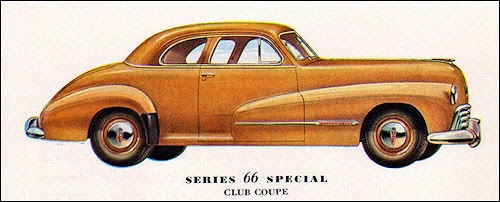
After I lived in the downtown hotel a few weeks, I rented a little furnished house complete with a carport to protect my prized 1947 Oldsmobile ‘Series 66’ Club Coupe my high school graduation present. With my new adult responsibilities I grew up a lot over the next few months as I learned what it was like to live as an adult. Outside of the movies once a week, I stayed home and saved my money but I sure missed going to races.  

One Saturday morning in mid-September, I was listening to the radio and checking over the Olds when a heard steps. It was the postman about ten years older than me who handed me my mail that included the latest editions of my connections to the racing world - Speed Age magazine and National Speed Sport News. “Say, I been meaning to welcome y’all to town, since I couldn’t help but notice you’re a race fan, too. My name’s Eddie.”

After a few pleasantries about races and tracks we (mostly I) had seen, Eddie asked “Y’all ever been to either of our local tracks?” I confessed to my new friend that I hadn’t heard of them. “Well,” Eddie said “They’re running tonight at Union Speedway, out five miles west of town on Union Road off Highway 23. It ain’t no Indianapolis Speedway but y’all ought to come. The fun all starts at 6 o’clock.”

Distracted, I told Eddie I would think about it, and turned to go in the house, but not before Eddie gestured at the copy of National Speed Sport News in my hand. “Heard of that new kid on the cover- Foyt? I wonder if he’s as hot as they say he is? I read my copy last night and it says he won a bunch of them ‘midget car’ races in Texas and just won an IMCA ‘big car’ feature.”

I coughed instead of snorting “I don’t know Eddie, never heard of him, but he’s probably just another of those guys that’s a flash in the pan.” Eddie grimaced “you may be right. I’ve never seen a midget or big car race like you so I wouldn’t know.”  As he turned and walked across the dusty lawn towards my neighbor’s house Eddie said over his shoulder “Well, hope to see to y’all out there at Union tonight.”


Later that afternoon my mind kept drifting back to Eddie’s invitation as I read the Speed Age article on Charlie Sacks’ Hal Ford ‘Offy Killer.’ What with graduation, moving, and starting my job, I couldn’t remember the last time I’d heard the roar of a racing engine, so I changed into my Bardahl t-shirt and grabbed the car keys. 

Please feel free to offer your comments, either good or bad. The second installment will be posted on October 1 2014.                  
                

Wednesday, July 23, 2014

Progress on the Arizona Hard Chrome midget! 

If you are regular visitor to this site, you have been able to follow progress of the restoration of Bud Trainor’s 'Arizona Hard Chrome Special' midget that was driven through the years by drivers that included Bobby and Al Unser, and Paul Jones.

We are honored that Ron and the car’s owner Dan Ricehouse has allowed The Checkered Past to show off progress of the restoration. If you are a first time visitor, please check the archive for previous stories.  When we last left Ron Trainor (Bud’s son) the restoration of the V-4 midget engine was completed and ready for installation in the restored chassis.


Here is the latest update from Ron:

“I also sent these pictures to the Unser Racing Museum in Albuquerque.  About two hours after I sent the email, I received a call from Al Unser.  He said when he looked at the pictures he got a tear in his eye. He also said we were doing a great job on the restoration and that he would love to have the car in their museum for one month or ten years -as long as we want and promised they would manage it and take care of it. 

If the car was mine that’s where I would leave it, but since my friend Dan Ricehouse is the owner of the car, it’s up to him.  He says he has offers from three other museums that also want to display the car. So it looks like we may have to split time between all the interested museums. “


Keep up the great work on the restoration, Ron I'm sure your Dad would be proud. Thanks again for sharing!   

Monday, June 16, 2014

More of Roy Morris' list of great drivers 

Roy Morris in front of the Dallara 
factory in Speedway Indiana
photo by Wayne Kimbell

In today’s installment, we return to contributor Roy Morris’ list of great drivers that he saw perform which dates back to the first race Roy attended in October 1945. Many of the drivers on today’s list are best remembered primarily as midget drivers. 

Jerry Piper
Andy and Gilbert Guthrie   
George Amick
Paul Russo
George Lynch
Henry Banks
Troy Ruttman
Karl Young
Jimmy Bryan
Jack McGrath
Andy Linden
Jack Tate
Perry Grim
Bill Mackey
Chuck Hulse
Johnny McDowell
Tony Bettenhausen
Cecil Green
Gib Lilly
Sam Hanks
Norm Holtkamp
Wayne Dickerson
Don Cameron
Bob Kelsey


Wednesday, June 11, 2014

'Racer' Roy Morris remembers Ray Crawford 


Ray Crawford's official Speedway photo
courtesy of the IUPUI University Library
Center for Digital Scholarship
Indianapolis Motor Speedway Collection

One of the names on  Roy Morris's list of great drivers that he saw race is that of Ray Crawford, who was a P-38 fighter ace in the World War 2 African theater and jet fighter plane test pilot. Crawford raced midgets following World War 2,  won the stock car class of the Mexican Road Race in 1954, and competed in the Indianapolis '500' three times, All his accomplishments came in addition to his day time job running his family's Southern California supermarkets. 

Ray befriended a young race fan, Roy Morris, who shares with us his memories of Ray Crawford:

“I knew Ray fairly well back when he first started midget racing. I was born in 1933 and saw my first midget race at the Los Angeles Coliseum in October of 1945 and have been a race fan and part time participant ever since. 

Around 1948, I was hitchhiking my way to a midget race at Culver City Stadium. I was on the corner of Washington Boulevard and Western Avenue in Los Angeles when a brand new red Ford convertible with white leather upholstery stopped to pick me up. It was Ray Crawford! He took me all the way to the track at Culver City and then drove me home after the race. He did this many times back in those days and even called my house to make arrangements.

I remember how Ray used to qualify at Gilmore when he first started driving. The outer crash wall at Gilmore was more of a rounded rectangle while the track was itself an oval shape with short straight-aways. Ray would follow the crash wall line while pitching the car sideways violently as he entered and exited the turns. He was almost too brave for that time and place! 

Usually, Ray wore brown flying coveralls over his business clothes (usually a suit and tie) when he raced. I taped his wrists at Gilmore one night to keep out the dust and dirt. I remember when he finished the Gilmore Grand Prix near the front and I was proud of him (Ray finished fifth in the 150-lap Grand Prix in 1949).”  

One thing I will never forget about Ray was something he said to me as we were driving back to my house from a race in Culver City around 1950. Ray said to me that he would not be doing any racing for a while and I asked why. 

He said very nonchalantly, "We're building a new store in El Monte and I need to me there. I can't afford to get hurt right now." It did not dawn on me at first, but Ray was acknowledging the risks he took while driving a race car- to me, this was the ultimate in confronting the risks!”

I lost track of Ray after he went to Indianapolis Motor Speedway. Years later, I went to his store (Crawford’s Village Market) in El Monte to look him up. Outside in the parking lot, I found an old Indy car painted a cream color with red highlights, had no engine or transmission with Edgar Elder's name listed on the side as Chief Mechanic. 

I went into the store and asked for Ray, but he was out of town that day.  The last time I saw Ray was at Ascot in 1988 - he was dressed to the "nines" as usual in sport coat and slacks. 

I took my collection of pictures to one of the last Gilmore reunions at the Gilmore Adobe. Johnny Boyd was there and wanted to see them. Boyd was engrossed looking at them when he came across the pictures of Ray, he laughed and said Ray was not much of a driver but was brave as could be.

In all the time I spent with Ray, he never once mentioned his WW II flying experiences. It was only recently that I began to understand his contribution to the war effort. I now know that he flew P-38's in Europe and shot down at least five German aircraft, qualifying him as an Ace. 

After the war, Ray was assigned as one of the test pilots on the first jet fighter, the Lockheed P-80. He and Richard Bong, one of the most successful fighter pilots of WW II, alternated test flights out of Burbank in the P-80. 

One day, Ray had a mechanical problem before takeoff and returned to the hanger. After the problem was corrected, it was Bong's turn. He took off but immediately ran into trouble, crashed and was killed. Ray never mentioned any of this while he was with me.”

Thanks for sharing your memories of a true American hero, Roy 

Wednesday, June 4, 2014

The Arizona Hard Chrome V-4 engine completed! 

As regular visitor you have followed and seen the photos of the restoration of Bud Trainor’s Arizona Hard Chrome midget that was driven through the years by drivers that included Bobby and Al Unser, and Paul Jones. If you are a first time visitor, please check the archive for previous stories.  

When we last left Ron Trainor (Bud’s son) on the restoration of the V-4 midget engine he had to order new injector stacks, finish little things such as fittings and hoses, breathers, and mount the oil filter.

We are honored that Ron has allowed The Checkered Past to show off the latest photos of the completed engine ready for installation in the car. Compare the completed restoration to the black & white photo of the engine when the car first debuted. Ron and his crew at Arizona Hard Chrome did a great job!