Showing posts with label Indy 500. Show all posts

Tuesday, January 19, 2016

Can you identify this mystery Indianapolis roadster?
 
 
Reader Gene Ingram of New Castle Indiana recently sent this intriguing photograph of an Indianapolis roadster. The photographer, location, year, and identity of the car is unknown. It appears to be a Watson-built car of a Watson copy.  Can one of our readers fill in some of the details?
 
Left double click on the photo to enlarge
 
Post your guesses in the comments section, or send them to kevracer@aol.com

An update: historians Steve Zautke, Ron Rose and Greg Littleton all believe that this was a Watson copy built by Wayne Ewing for Al Dean's Dean Van Lines team, while historian Charles Fawcett believes that the setting is likely in the Southwest, as the flat roofs suggest that this is not snow country.  


Wednesday, December 30, 2015

INDY BENCH RACING 2016 DATES 

The team behind the Indy Bench Racing Weekend, Chuck Shuman, Anne Mitchell, and Clare Poremsky have announced  the weekend of March 18th to 20th as the 2016 dates for the Indy Bench Racing Weekend (BRW) 


The author has attended BRW many times and every event has been memorable. If you have not attended BRW before, make 2016 the year - you will not be sorry.  

Information provided by Indy Bench Racing Weekend

Wednesday, December 16, 2015


Unser Gibbs and Hendrick

2016 NMPA Hall of Fame inductees

 By Kevin Triplett


Three legendary names in motorsports have been chosed for induction into the National Motorsports Press Association (NMPA) Hall of Fame. Four-time Indianapolis 500 winner and three-time IndyCar champion driver Al Unser along with NASCAR (National Association of Stock Car Racing) multi-championship team owners Rick Hendrick and Joe Gibbs make up the 2016 NMPA Hall of Fame induction class.  

Hendrick received 88 percent of the votes cast by NMPA members, while Gibbs received 76 percent and Unser received 66 percent. Curiously, fellow four-time Indianapolis 500 winner Rick Mears also received votes but not enough for election into the NMPA Hall of Fame.
 
Al Unser in 1987

The Unser family name appears frequently in the annals of open-wheel racing history, with no less than six family members who have driven in the Indianapolis 500-mile race, but no member of the Unser family has achieved more racing success than Alfred “Al” Unser.

The Albuquerque, New Mexico native born May 29 1939 the youngest of four sons enjoyed a career that most racers only dream about, including being one of only three drivers (others are A.J. Foyt and Rick Mears) to win the legendary Indianapolis 500 four separate times and is the only driver to have both a brother (Bobby) and son (Al Jr.) as fellow Indianapolis ‘500’ champions.

Unser made his first USAC (United States Auto Club) oval track start at the one-mile Wisconsin State Fairgrounds in Milwaukee on August 23 1964 behind the wheel of J.C. Agajanian’s unloved Offenhauser powered Troutman rear engine car. Al spent most of the 1965 USAC season as the driver of Jerry Eisert’s #96 Harrison Special, but his big break came at the 1965 Indianapolis 500-mile race when he qualified Texan John Mecom’s Lola T70 in a last minute deal and went on to finish in ninth place.

Unser drove for the Mecom Racing team through the 1968 USAC season before the team was sold and became Vel’s Parnelli Jones (VPJ) Racing in 1969. Behind the wheel of a VPJ 'Johnny Lightning Special’ Colt/Ford, Unser won the 1970 Indianapolis ‘500’ in dominating fashion, as he led 190 of 200 laps. Unser went on to win the 1970 USAC National drivers’ championship with 10 race victories during the season.

Unser repeated as the 1971 Indianapolis 500 champion, and continued to drive for the VPJ Racing team through the 1977 season. In 1978, Unser drove Jim Hall’s ‘First National City Travelers Checks Special’ Lola 78/Cosworth and captured his third Indianapolis ‘500’ crown. 

After just  two seasons, Unser left Hall at the end of the 1979 season in a regrettable move to Bobby Hillin Senior’s Longhorn Racing Team, and over the next three seasons, Unser and the uncompetitive team struggled and notched no race wins. His replacement at Hall, drove the radical ground effects Chaparral/Cosworth to five wins in 1980, including the 1980 Indianapolis '500.' 

Al’s career rebounded when he joined Penske Racing in 1983 and in his first six races with his new team, he never finished worse than third and by his consistency won the 1983 CART (Championship Auto Racing Teams) championship. In 1987, Al started the season without a ride, and only got his ride at the Indianapolis Motor Speedway after Danny Ongais destroyed his Penske PC-16/Chevrolet entry in practice, suffered a concussion and was not medically cleared to drive.

After three days of practice, Al qualified for the 20th starting position on the second weekend in a 1986 March chassis powered by a Cosworth engine which began the month of May as an inoperable show car.  Al dodged a first lap spin by Josele Garza, and went on to win his fourth Indianapolis ‘500,’ as he and his Cummins/Holset Turbo sponsored entry led the last 18 laps after leader Roberto Guerrero stalled on his final pit stop.

Al Unser led 15 laps in Kenny Bernstein’s Budweiser Lola/Chevy in his 27th and what proved to be his final Indianapolis ‘500’ appearance in 1993. Al was entered for the 1994 Indianapolis ‘500’, in an underfunded Lola T9400/Ford, but announced his retirement on May 17, 1994, just days before his 55th birthday.  As reported by the New York Times, Unser stated “I always said if the day came when I wasn't producing the right way, if I wasn't happy, I'd get out.  I think the time has come. I'm not all there with the race car, so I decided to pull back and retire."  Al Unser Junior went on to win his first Indianapolis '500' on his father's 55th birthday.

Al Unser’s career statistics at the Indianapolis Motor Speedway are amazing: He leads all driver in laps led with 644, is ranked second in the number of races led with 11, and stands second in total race mileage with 10,890 miles (4,356 laps)  completed.  Al scored three season championships and 39 championship car victories on surfaces that included dirt ovals, paved ovals and road courses.  He remains active with The Unser Racing Museum in Albuquerque, New Mexico.   


 Rick Hendrick, right, with Ray Evernham, left,
at the Indianapolis Motor Speedway in 1994

Born in 1949, Joseph Riddick “Rick” Hendrick III was raised on the family farm near Palmer Springs, Virginia, and at 27 became the youngest Chevrolet dealer in the United States and built the Hendrick Automotive Group into an empire which is listed as the sixth-largest automotive group in the country with 73 dealerships. Hendrick was the inspiration for the “Tim Daland” character in the 1990 film Days of Thunder.

Since its first race, the 1984 Daytona 500 and its first win seven races later with Geoff Bodine at Martinsville (Virginia) Speedway, Hendrick Motorsports has amassed countless NASCAR records in its 32-year existence. Among the most notable: 14 NASCAR driver championships, including 11 in the premier Winston Nextel and Sprint Cup Series and 14 owner championships across three national series.


Joe Gibbs at the Indianapolis Motor Speedway in 1994 

Joe Jackson Gibbs’ eye for talent and the ability to mold individuals into champions has made him successful in both the National Football League (NFL)  and NASCAR. In 16 seasons as an NFL head coach, the Mocksville, North Carolina native compiled an overall won-loss record of 171-101 and three Super Bowl championships with the Washington DC NFL franchise.

In 23 seasons as a NASCAR team owner, Gibbs’ teams have won four NASCAR Cup-level championships, with Bobby Labonte, Tony Stewart and the 2015 series title with Kyle Busch, and 128 Sprint Cup race wins. Joe Gibbs Racing once involved in NHRA (National Hot Rod Association) team ownership has also compiled four Nationwide/XFINITY Series owner and one driver championships also with Kyle Busch and 112 race wins.

The trio of motorsports legends will be officially inducted in ceremonies to be held at the Embassy Suite hotel in Concord, North Carolina on January 16, 2016. The NMPA Hall of Fame is located on the grounds of Darlington Raceway in Darlington North Carolina and is open from 10 a.m. to 4 p.m. Monday – Friday.


Some of the information contained in this article was provided by the National Motorsports Press Association (NMPA) of which the author is a member.
 
The photographs that accompany this article appear courtesy of the Indianapolis Motor Speedway Collection in the IUPUI University Library Center of Digital Scholarship.  

Monday, March 23, 2015


Notes on Joe Dawson and the 1912 Indianapolis 500

By William ‘Bill’ Blaylock -  Dallas Texas

All photos courtesy of the Indianapolis Motor Speedway Collection in the IUPUI University Library Center for Digital Scholarship

At some point over the past year or so, I became interested in Joe Dawson and the 1912 500, probably in part because the big, bright blue National he drove is always on display at the Speedway Museum.  Apart from the dramatic finish, I never knew much about him or the race, or for that matter, the times.   So I have tried to read up on Dawson and the race.  As a part of that, I thought I should also read up on what the country was like in 1912.  

Indianapolis must have been exciting in 1912.  America was thriving and changing rapidly, and nearly all of the change was for the good. The country had prospered through the Gilded Age, a period of strong economic growth and accumulation of wealth, and it had endured but recovered rapidly from the Panic of 1907, a two-year recession where unemployment peaked at 8.5 percent.  There were several new and powerful economic and social forces that were shaping the country. 

One was transportation – publicly accessible transportation of people, products and information available from railroads, automobiles, the telephone and an extensive network of newspapers capable of reporting almost any national event within hours.   This was possible “by new technologies in steelmaking, the production of oil and gas and an expanding electrical grid.   By 1912, we could form and shape metal like never before, with foundries, precision machine tools such as lathes, milling machines and planers, and with both acetylene and electric welding.  We had steam, electric, gasoline and diesel motors. 

These advancements were putting the country through what was arguably the most rapid change through innovation in the country’s history.  To put the speed of change in context, thanks to the Wright Brothers, we had been flying for nine years.  Yet it had been a mere 26 years since Captain Lawton and Lieutenant Gatewood set out with a unit of the 4th Cavalry to find Geronimo.

Part of the changing times was our growing appetite for entertainment and spectator sports.  We had acquired the economic wherewithal, leisure time and access to news to pursue them.   By 1912, we had amusement parks in cities throughout the country, including Indianapolis, which were modeled after Coney Island, with roller coasters, midway rides, games of chance and entertainment.   We had vaudeville, nickelodeons and motion picture theaters.  The first generation of baseball stadiums had been built.    The Indianapolis Motor Speedway had been operating for three years.  By 1912, entertainment and professional sports had become industries.

In the midst of all of the progress at the national level, Indianapolis was at the leading edge. In the late 1800s, Indiana had undergone an oil and gas boom with the discovery of the rich Trenton gas field east of Indianapolis.   The boom set the stage for the economic base that still defines Indiana to this day -- manufacturing.   It was access to abundant and inexpensive natural gas that brought the great steel mills to northern Indiana.  Other manufacturers set up throughout the state.   The gas fields had pretty well played out soon after the turn-of-the-century, but the manufacturers turned to coal for energy, stayed on and flourished. 

Inside Indiana’s manufacturing boom was the automobile boom.  It is both easy and accurate to compare Indianapolis then to Silicon Valley today, with its community of entrepreneurs creating car companies and a broad array of accessory companies with new ideas and new technologies.   This community included the Speedway’s founders:  Carl Fisher and Jim Allison of Prest-O-Lite, Frank Wheeler of the Wheeler-Schebler Carburetor Company and Arthur Newby of the National Motor Vehicle Company.

Joe Dawson's official IMS photograph

Joe Dawson was ready for the 1912 500.   Born in 1889 in Odon, Indiana, he had been a Marmon mechanic and later factory driver.  He gained notoriety racing for Marmon in some of the pre-500 events at the Speedway and the bloody 1910 Vanderbilt Cup, where he finished second.  He also won the Savannah Challenge Trophy race in 1910 and finished fifth in the 1911 500.  After Ray Harroun’s victory in 1911, Marmon withdrew from racing.  Dawson took a leave of absence from the company to drive a National factory car in the 1912 500.  He also brought Harry Martin over from Marmon.  Martin had ridden with him six times during the 1910 season.  To get in physical shape for the race, Dawson worked out at the downtown Indianapolis YMCA.

The rules for the second 500 were pretty much the same as with the first, except that two-man cars were mandatory.  The second man was officially designated a “mechanician.”   Only 24 cars started the race, a count way down from the 40 that started in 1911.  Several car companies decided not to re-enter a team.  Personally, I had been under the impression that in its early years, the 500 field was made up of factory cars.   But in fact eight of the 24 cars were entered by individuals, such as the Fiat entered by E.E. Hewlett, a successful attorney and businessman from California who enjoyed racing.   The rules allowed for engines up to a massive 600 cubic inches.  Eleven of the 24 cars had engines larger than 500 cubic inches, but others were smaller, from the 491 cubic inches of the four cylinder Nationals down to the 301 cubic inch engine in Hughie Hughes’ lightweight, wire wheeled Mercer.   In his Design and Development of the Indy Car, the late Roger Huntington tells us that the typical engines of the era were T-heads that might put out 100 HP at 2,000 rpm, and that the top speed for the cars was probably 90-100 mph.   Further, in describing the handling of those early cars, he says, 

“Probably the most notable characteristic of those early chassis was the twisting and bending of the frame.  This prevented any degree of precise suspension tuning.  You couldn’t predict what path a wheel would follow when rising over a bump.”


There was a lot of buzz about the second running of the 500, but it wasn’t clear until race day that attendance would be up from the prior year.   The local press reported that the Union Railway Company and the Ben-Hur traction line began special runs to the track at 4:30 am.  Between them, they moved 60,000 fans by the 10:00 am starting time.    Automobiles poured into the infield over two wooden bridges and through a new tunnel on the main straight next to Grandstand C.   Estimates of attendance ranged from 70,000 to, according to The Indianapolis Star, a “throng near 100,000.”   The late Al Bloemker in his book 500 MILES TO GO says it was 90,000, as did the race coverage from The New York Times.   To understand the significance of that level of attendance, think about this:  according to the census for 1910, America’s population was about 92 million; if we assume that by 1912 it had grown to 95 million, it means that roughly one out of every 1,100 people in the entire country was there for the race.  That is a remarkable statistic. 

The 24 cars were lined up for the start with five cars in four rows and four in the fifth row.  The fastest in qualifying had been David Bruce-Brown at 88.45 mph in a National which was identical to Dawson’s.  Dawson had qualified at 86.13 mph.     However, the pole position went to Gil Anderson’s 390 cubic inch Stutz, with a speed of 80.93 mph.   The rules provided that to qualify, the car had to run at least one lap at 75 mph or more.   Otherwise, the cars that qualified were lined up in the order that the entry forms were received.  

Only one car failed to qualify, which was Lee Oldfield’s 243 cubic inch Mason.   Dawson was slated to start on the second row in the eighth position.  However, Louis Disbrow’s crew made a last minute change to the gear ratio in his 450 cubic inch Case.  He arrived late to the grid.  The officials moved him from the front row to the last starting position, which moved Dawson up a notch.

All of the drivers and crew learned from practice sessions that the key to a good race would be good management of tire wear.   As Ray Harroun demonstrated in 1911, running a few miles per hour below a car’s potential would extend tire wear significantly.

Carl Fisher drove the Stutz pace car and brought the field around for the start at 40 mph.  Teddy Tetzlaff’s 589 cubic inch Fiat grabbed the lead from his middle starting position on the front row, finishing the first lap at 86 mph.  He hung on for one more lap, then Ralph DePalma and Spencer Wishart blasted past in their powerful 583 cubic inch Mercedes.  

By lap eight, Dawson was running seventh, behind DePalma, Wishart, Bruce-Brown, Tetzlaff, Ralph Mulford (in a Knox) and Howdy Wilcox (a third National).  By the 12th lap, the fast pace began taking its toll, as the two Case cars of Louis Disbrow and Eddie Hearne, along with Wilcox, had to pit for tires.

On lap 15, Dawson was running in sixth behind Tetzlaff and, as reported by The Horseless Age, he “outguessed Tetzlaff going into the first turn and moved in toward the pole.”   After a few more laps, Wishart fell off the pace with tire trouble and Dawson inherited fourth.   DePalma stayed in front, but by only a few seconds.  He was closely followed by Bruce-Brown, Mulford and Dawson.  At the 40 lap mark, the race remained anyone’s guess, with Dawson and Tetzlaff closely following DePalma.   But soon thereafter, the Mercedes started pulling away, averaging 81 mph.

On the 108th lap, Dawson came in for relief.  Don Herr took over for 36 laps, or roughly one hour of track time.   At 160 laps, the race was clearly DePalma’s to lose.  Dawson was back behind the wheel in second, but four laps down.   Behind him were Tetzlaff and Burman, seven laps down from the leader.  There were 12 cars running. 

Mulford, who ran with the leaders early on, had made two lengthy stops for clutch repairs and was back in 12th, 51 laps down from DePalma.    With ten laps to go, DePalma had stretched his lead over Dawson to five laps.  His Mercedes was running flawlessly and he showed no inclination to slow down and cruise to the checkered.   Many spectators started heading to the exits. 

And then it happened. 

As DePalma came down the front stretch to start lap 195, his big Mercedes was leaking a visible trail of oil and the engine was noticeably rough.  It had broken a connecting rod, and the ragged end of the rod had punched a hole in the crankcase.   DePalma slowed down to 60 mph and tried to limp home on three cylinders.   Dawson’s crew alerted him with the pit board.  The fans who remained in the stands realized a drama was at hand.  Will DePalma make it to the finish?  Is a five lap lead enough?

By the time he completed his 198th lap, DePalma had slowed to 40 mph.  His lead over Dawson was down to three laps.   At some point past turn one, the engine seized and the big white car coasted to a halt, but accounts differ on where that was on the track.  The Horseless Age said the car stopped at the beginning of the backstretch, two miles from the finish line.  Bloemker marks it one mile further down the track to the beginning of the fourth turn.  

DePalma and Jeffkins push their disabled racer past the pits
Race winner Joe Dawson looks on in the foreground

Wherever it was, DePalma and his Australian mechanician, Rupert Jeffkins, got out and started pushing the car toward the finish line.  It did not take long for Dawson to pass them, complete 200 laps and drive two laps more as insurance against a scoring error.   DePalma and Jeffkins eventually pushed the Mercedes down the front straight to the line, to the applause of the crowd.  But the resounding ovation had gone to Joe Dawson.  He was the hometown hero and a favorite Hoosier son. 

There were 10 cars on the track at the finish, with Ralph Mulford still running.   He pulled in, but was informed by Speedway management that he would not get the $1,200 prize for 10th place unless he completed 500 miles.  He returned to the track and continued on at a leisurely 60 mph pace.   With 17 laps to go, he stopped so he and his mechanician could have some fried chicken and replace the shock absorbers.  They continued on, completing the 500 miles some two and a half hours after Dawson, at an average speed of 56 mph.  


The famous photograph of Dawson accepting the checkered flag

Dawson’s speed for the 500 miles was 78.72 mph, 4 mph faster than Harroun’s run the year before.  A post-race article reported that “never before has a man traveled so far and so fast.”  The National’s four cylinder, 491 cubic inch engine, with its 5.0 inch bore and 6.25-inch stroke, was the largest ever to win the 500.   Nearly every part on the car was a stock part from a National passenger car.   The race would be the only instance where a car with Michelin tires won Indy.  Dawson had made four pit stops, three of  which were for tires.  Including contingency prizes, he won $25,000, a princely amount for 1912.  It exceeded Harroun’s 1911 winnings by more than $10,000.  


                   Joe Dawson accepts the congratulations of Speedway founder Carl Fisher


When he pulled in, Dawson was exhausted but ecstatic.      After a brief ceremony, he got in his personal car and drove to his home at 2828 North Illinois Street in Indianapolis.  He ran up the steps and told his mother, a widow, that he had just won the Indianapolis 500.   She prepared supper for him and then, according to Bloemker, he took a trolley downtown to the YMCA for a steam bath, and “savoring an expensive cigar, he strolled through the dusk to his home two miles away.”   Joe was 22 years old.  He remained in record books as the youngest driver to win the 500 for the next forty years, until Troy Ruttman won in 1952.

It was a safe race with only a few incidents, mostly due to tire failures.  Bert Dingley’s 597 cubic inch Simplex caught fire, was doused, but later dropped out with a broken connecting rod.   On Burman’s 157th lap, both of his rear tires failed and his car rolled over.  Thankfully, he and his mechanician sustained only minor scrapes.  He had suffered tire wear all day and had been in seven times for replacements.   Likewise, both rear tires failed on Mel Marquette’s 425 cubic inch McFarlan.  The car straddled the outer retaining wall on the front stretch then scooted along it until coming to a halt against a telephone pole.  No one was injured.   Anderson’s Stutz blew a tire and rolled over twice on the north end of the track.  He and his rider were thrown clear without serious injury. 

Arguably, one might credit the best driving of the day to Hughie Hughes for his remarkable run in the diminutive and underpowered Mercer.   It has largely been unrecognized by history, but he drove to third place despite tire troubles that forced him to make six pit stops, and the fact that the Mercer ran out of gas and coasted to a halt near the fourth turn.  Like DePalma and Jeffkins, Hughes and his mechanician got out and pushed the car to the pits, some three quarters of a mile.  They refueled and rejoined the race.   

Ralph DePalma was of course very disappointed after the race, but the press credited him for being a gentleman.  His grand moment on the bricks would come three years later, in 1915.  Again, he was leading in a Mercedes with just a few laps to go.  Again, his Mercedes threw a rod, ventilated the crankcase and started spewing oil.   And again, he slowed down, running on three cylinders, and tried to nurse the car to victory.   In 1915, DePalma made it. 

 Joe Dawson’s racing career tapered off dramatically after his win.   He ran in two more AAA events.  One was on the Elgin road course in 1913, and the second was the 1914 500.  There, on his 46th lap, he swerved his Marmon abruptly to avoid hitting Ray Gilhooly, a driver who had crashed and was thrown onto the track.   The car turned over and severely injured Dawson.   He recovered but wore a back brace for a year.   His career as a driver in championship racing was over; however, in the years that followed, he remained engaged with automobile businesses and the sport, including serving as a test driver for Chalmers and as a race official for AAA.  He died of a heart attack in 1946 while inspecting the track at Langhorne on behalf of AAA.  He was 56.

Going into the month of May 1912, the Speedway management must have had some concerns and doubts about the second 500, especially in view of the light car count and reduced participation by car companies.  But the race turned out to be a thriller and a success.  Both attendance and ticket prices were up significantly.  The 1912 race confirmed the event’s viability and its status as the largest one-day spectator event in the world.   It also confirmed the Speedway’s role as the Grand Lady of all sports facilities.  And it all got better and better for years to come. 


Tuesday, March 17, 2015


Eight 2015 USAC Hall of Fame inductees announced

The first eight inductees into the 2015 USAC (United States Auto Club)  Hall of Fame have been announced with four more inductees to be selected by popular vote from a list of 16 eligible candidates distributed through social media will be announced April 15, 2015.

The fourth annual USAC Hall of Fame induction ceremonies will be held July 25 2015 at the Lincoln Tech Indianapolis Speedrome in Indianapolis, Ind. in conjunction with the inaugural "Tony Stewart Classic" Midget race. The special "non-points" event will bring together Midget participants from across the country in what promises to be an exciting night of pavement short-track racing on the track which has hosted more USAC races (494) than any track in history.

The eight members of the 2015 class of inductees included five drivers, two car owners and a chief mechanic. They are (alphabetically) Clint Brawner, Larry “Butch” Hartman, Lindsey Hopkins, Jim Hurtubise, Fred Lorenzen, Roger Penske, Clark “Shorty” Templeman and Ron “Sleepy” Tripp.

Clint Brawner, of Phoenix, Ariz., was one of the most accomplished of all car builders and crew chiefs and won National driving titles as a car owner with drivers Jimmy Bryan (1954, 1956 and 1957) and Mario Andretti (1965, 1966 and 1969). He finally entered victory lane as the winning crew chief with driver Andretti in 1969, who piloted his Brawner Hawk to victory.

Brawner amassed 51 championship wins and his impressive driver list includes the likes of Bryan, Andretti, A.J. Foyt, Bob Sweikert, Roger McCluskey, Troy Ruttman, Rodger Ward and Eddie Sachs. Brawner's cars won the first four Hoosier Hundreds with drivers Sweikert and Bryan and, in 1957, he won the 500-mile "Race of Two Worlds" at Monza, Italy with Bryan. Each May, a crew chief or mechanic at the Indianapolis ‘500’ is awarded the prestigious Clint Brawner Mechanical Achievement Award in his memory.

Larry “Butch” Hartman, of Zanesville, Ohio, won five USAC Stock car championships in the 1970s with a total of 29 USAC Stock car victories in his career. The 1966 USAC Stock car Rookie of the Year and 1967 USAC Most Improved Driver, then won the first USAC 500-mile stock car race held at Pocono, Pa Raceway in 1971.

Lindsey Hopkins, from Miami, Fla., fielded competitive National Championship cars for three decades, entering up to four cars on occasion at the Indianapolis 500. Never an Indy 500 winner, he appeared headed for that achievement in 1955 until his driver, two-time "500" winner Bill Vukovich, perished in an accident while leading in an effort to score his third consecutive victory.

In 1957 and 1959, Hopkins scored a second-place finish at Indy with driver Jim Rathmann. In 1972, Roger McCluskey won the 1972 Ontario 500 in a Hopkins entry, and then earned the 1973 USAC National Championship in another Hopkins car. Championship wins also came for Hopkins at Phoenix, Ariz., Atlanta, Ga., Milwaukee, Wisc., Langhorne, Pa., Springfield, Ill. and Brooklyn, Mich. with drivers McCluskey, George Amick, Tony Bettenhausen, Bobby Marshman and Jim Rathmann. In 1959, Rathmann won the "special" Championship race driving for Hopkins at the Daytona International Motor Speedway.

Jim Hurtubise, of North Tonawanda, N.Y., stood the racing world on its ear in 1960 when he flirted with the 150-mph. barrier at the Indianapolis Motor Speedway. He was that year's Indianapolis "500" Rookie of the Year. National Championship wins came at Sacramento, Calif., Langhorne, Pa. and Springfield, Ill. (twice), before suffering serious burns in an accident at Milwaukee, Wisc. in 1964. He was the last driver to wheel a front-engined car in the Indy 500 in 1968. A spectacular Sprint car racer, he won 14 USAC features, including five in a row at the Terre Haute (Ind.) Action Track. Also an accomplished stock car veteran, he won the 1966 Atlanta 500 NASCAR race. In 1993 he was inducted into the National Sprint Car Hall of Fame.

Fred Lorenzen, of Elmhurst, Ill., was the 1958 and 1959 USAC Stock Car Champion, with 12 USAC feature victories during his career. The 1965 Daytona 500 winner, he also won the 1963 and 1965 World 600 in Charlotte, N.C. Named one of NASCAR's 50 greatest drivers, "Fearless Freddie" was inducted into the Motorsports Hall of Fame of America in 2001. He was also a multiple race winner at NASCAR ovals at Richmond and Martinsville, Va. In nine Daytona 500 starts, he finished out of the top-10 only once. Fred was a 2015 inductee into the NASCAR Stock Car Hall of Fame.

Roger Penske, born in Shaker Heights, Ohio, has set the gold standard for car owners, winning a record 15 Indianapolis 500s. An astute businessman, he was USAC's 1962 Road Racing Champion but his extensive motorsports involvement has earned the respect of everyone, earning numerous championships and race victories in multiple disciplines.

Penske is a member of the International Motorsports Hall of Fame, the Motorsports Hall of Fame of America and numerous other Halls of Fame, the "Captain" actually competed in the 1961 and 1962 United States Grand Prix Formula One races. His list of top-caliber drivers has included Indianapolis 500 winners Mark Donohue, Rick Mears, Bobby Unser, Danny Sullivan, Al Unser Sr. and Jr., Emerson Fittipaldi, Helio Castroneves, Gil DeFerran and Sam Hornish, Jr.

Clark “Shorty” Templeman was USAC's National Midget Champion in its first three seasons, 1956, 1957 and 1958. He scored 22 USAC Midget wins prior to his untimely death in a crash at Marion, Ohio in 1962. A multiple Midget racing champion in the northwest, he scored a "sweep" of the three features comprising the 1956 "Night Before the 500" program in Indianapolis, Ind. Inducted into the National Midget Auto Racing Hall of Fame in its inaugural class of 1984, he competed in five Indianapolis 500s, earning a fourth-place finish in 1961.

Ron “Sleepy” Tripp, of Costa Mesa, Calif., scored more USAC Midget victories (total National and Regional) than anyone in history. His total of 161 lists him third on the all-time USAC list behind Rich Vogler (171) and A.J. Foyt (162). The 1986 inductee into the National Midget Auto Racing Hall of Fame won a pair of USAC National Midget titles (1975 and 1976) and seven championships in the Western Midget Series.

Tripp also earned notoriety with his exploits to New Zealand, which resulted in numerous major race victories and championships, including an amazing nine wins in the prestigious 50-Lap Classic at Auckland. In 1985 and 1987, he also won the prestigious Belleville Midget Nationals in Kansas. In addition to his United States and New Zealand successes, his career also included victories in Australia and Canada.

Information furnished by United States Auto Club press office

Wednesday, September 24, 2014

For this installment of The Checkered Past, we are going to try something a little different- a work of fiction. The author has asked to remain anonymous.

A Wild Ride- chapter one
A work of fiction by “Anonymous”  

I was born in Terre Haute Indiana in July 1934, and grew up on a corn farm in Fountain County near the town of Covington, the hometown of my racing hero, Forrest Parker. My Dad was a racing fan, and I became one too at a really young age. I fondly remember that he and I visited many dusty dirt tracks as I grew up and of course, every May we made the trip to see ‘the big one’ in Indianapolis. My first ‘500’ was in 1941, and the war years were hard for me with no racing. Dad and I missed the 1946 ‘500’ because he didn’t think it would be worth it because “that old place has got to be falling down, son.”  We went again in 1947 and I saw all the 500-mile races through college. 

During the summer of 1954 in between my sophomore and junior years of college at Purdue University, I went into partnership with a couple of buddies, Hal and Sam, to buy and race a ¾ midget powered by a tired little Crosley engine. I did most of the mechanical work on the purple ‘HCS Special,’ but we took turns driving. Sam, whose Dad’s 1952 International pickup hauled the car, spun out twice in Plymouth Indiana, and I drove okay at Mount Lawn Speedway near New Castle, but then in the third race at Rushville, with Hal driving, the crankshaft broke.

With no money to fix the ruined engine, we sold the car at a big loss which temporarily ended my dream of becoming big-time racing driver. Hal and Sam both lost all interest in racing after the tragedies during the terrible summer of 1955, with Vuky, Jack McGrath, and all those people killed at LeMans France.  Not me, though; I was a life-long racing fan no matter what happened.      

After I graduated from Purdue in 1956 with my Industrial Engineering degree, I took a job with a furniture building company in the Deep South. It was my first time ever below the Mason-Dixon Line, and I’ll tell you that it took some adjustment for a Hoosier what with the different foods, the heat and the accents. The engineering work at Mr. Johnson’s factories came easy to me, and not surprisingly, my nickname at work was “Yank,” short for Yankee which everyone (but me) found hilarious.


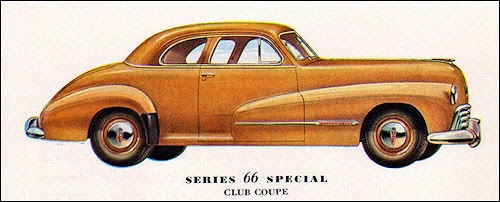
After I lived in the downtown hotel a few weeks, I rented a little furnished house complete with a carport to protect my prized 1947 Oldsmobile ‘Series 66’ Club Coupe my high school graduation present. With my new adult responsibilities I grew up a lot over the next few months as I learned what it was like to live as an adult. Outside of the movies once a week, I stayed home and saved my money but I sure missed going to races.  

One Saturday morning in mid-September, I was listening to the radio and checking over the Olds when a heard steps. It was the postman about ten years older than me who handed me my mail that included the latest editions of my connections to the racing world - Speed Age magazine and National Speed Sport News. “Say, I been meaning to welcome y’all to town, since I couldn’t help but notice you’re a race fan, too. My name’s Eddie.”

After a few pleasantries about races and tracks we (mostly I) had seen, Eddie asked “Y’all ever been to either of our local tracks?” I confessed to my new friend that I hadn’t heard of them. “Well,” Eddie said “They’re running tonight at Union Speedway, out five miles west of town on Union Road off Highway 23. It ain’t no Indianapolis Speedway but y’all ought to come. The fun all starts at 6 o’clock.”

Distracted, I told Eddie I would think about it, and turned to go in the house, but not before Eddie gestured at the copy of National Speed Sport News in my hand. “Heard of that new kid on the cover- Foyt? I wonder if he’s as hot as they say he is? I read my copy last night and it says he won a bunch of them ‘midget car’ races in Texas and just won an IMCA ‘big car’ feature.”

I coughed instead of snorting “I don’t know Eddie, never heard of him, but he’s probably just another of those guys that’s a flash in the pan.” Eddie grimaced “you may be right. I’ve never seen a midget or big car race like you so I wouldn’t know.”  As he turned and walked across the dusty lawn towards my neighbor’s house Eddie said over his shoulder “Well, hope to see to y’all out there at Union tonight.”


Later that afternoon my mind kept drifting back to Eddie’s invitation as I read the Speed Age article on Charlie Sacks’ Hal Ford ‘Offy Killer.’ What with graduation, moving, and starting my job, I couldn’t remember the last time I’d heard the roar of a racing engine, so I changed into my Bardahl t-shirt and grabbed the car keys. 

Please feel free to offer your comments, either good or bad. The second installment will be posted on October 1 2014.